How a 4.75 km loop, a 300-year-old rimu tree, and six years of growth brought me back to myself.
This month, I completed my 5th out of 6 walks in the Otari–Wilton Bush Walks in Wellington: Te Ara o Tama, a 90–120 minute loop tucked inside one of the city’s most beautiful pockets of native forest.
It was the kind of cool afternoon where the sunlight filters softly through the canopy and the air feels both crisp and forgiving. I didn’t rush. I let the path guide me, listened to the tūī, and noticed how different my body feels now than it did six years ago.
Somewhere along the trail, it hit me:
Last year, after years of therapy, I finally come out of my shell in New Zealand. And this year, still healing and facing some hardships, I am learning to find my footing in New Zealand.
And that realization has taken a long, complicated journey to reach. Care to join?

Arriving in New Zealand During a Hard Season
When I moved to New Zealand, the world was shifting — and so was I. The timing was harsh. I was emotionally fragile, physically weak, and overwhelmed by culture shock. I carried injuries, exhaustion, anxiety, and a sense of disorientation I wasn’t prepared for.
And in a country where nature is such a huge part of everyday life — hiking, biking, beach days, windy weather, outdoor weekends — I felt like I couldn’t participate. I watched people talk casually about their tramps and walks and felt heartbreakingly out of sync with the culture around me.
Instead of exploring the landscape, I sat in my own sense of inadequacy, incentivized by Covid’s self-isolation policies. I convinced myself I wasn’t strong enough, adaptable enough, or “Kiwi enough.” And I ultimately, didn’t want to be.
The YouTube Channel I Started… and Then Silenced
What a lot of people don’t know is that at the beginning of my life in New Zealand, I started a small YouTube channel — a creative outlet to document my life, travels and stay connected to myself.
One of my very first videos pictured me hugging Moko, the 300-year-old rimu tree in Otari–Wilton Bush. Or maybe, his cousin around the corner.
That video felt hopeful. Like the start of something.
But quickly after, I shut the channel down.
Partly because the pandemic made everything feel irrelevant.
Partly because sharing felt “out of place” here.
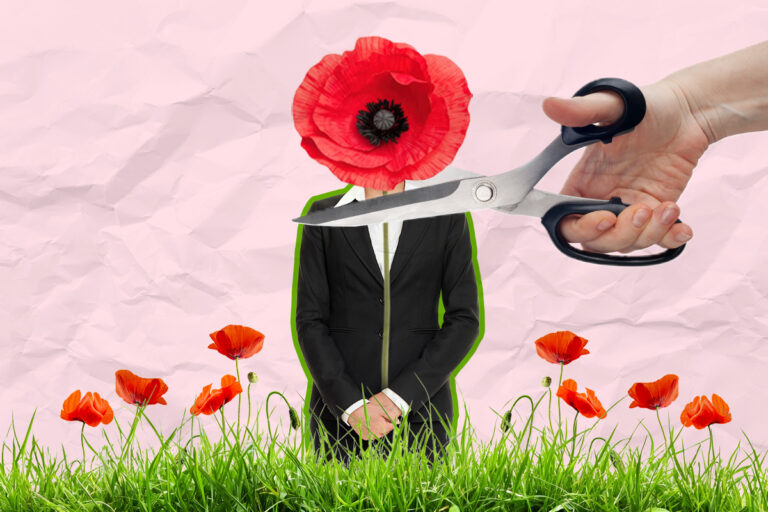
And partly because the way people reacted made me feel like expressing myself online — talking to a camera, being enthusiastic, being visible — was somehow inappropriate in a country where people pride themselves on being “chill” and understated.
The pressure was subtle, but it was enough.
I buried that part of myself and pushed creativity aside.
And that early video became a relic of a version of me I didn’t feel allowed to be.
Healing Through Nature and Quiet Progress
Healing, although it feels like that, rarely looks dramatic. It’s slow. It’s patient. It shows up as:
one calmer breath,
one longer walk,
one week of not getting sick after being out in the wind.
With the support of Jono, his family, my therapist, and now my own family again, I pulled myself out of some dark emotional corners. Not perfectly, but steadily.
Now, New Zealand’s nature — the same nature I once felt excluded from — has become one of my biggest markers of progress.
These walks are not just outings; they’re proof of healing.
The Unspoken Pressure of the “No Worries” Culture
One thing that took me years to articulate about New Zealand culture is how even in a place known for its laid-back “no worries” vibe, there are still expectations.
People pride themselves on not caring.
On being effortless.
On keeping things minimal and simple.
And while that can be beautiful, it can also create a quiet pressure:
Don’t try too hard.
Don’t be too expressive.
Don’t be ambitious in a visible way.
Blend in.
It’s ironic — the pressure to look effortless can be its own form of effort.
Talking to other migrants (and even some Kiwis) made me finally realize:
I wasn’t imagining it. I wasn’t alone.
A lot of us are negotiating the line between belonging and self-expression.
A Question From Home: “Have You Adapted Yet?”
Amid all this internal negotiation about belonging and self-expression, a question from home brought everything into sharp focus.
During my last visit to Mexico, my dad asked me repeatedly:
“Pero ya te adaptaste al país?”
(“But have you adapted to the country now?”)
And I didn’t know how to explain that I don’t want to adapt to a version of myself that requires shrinking. I don’t want to censor my voice or my creativity just to fit into a cultural norm — Not in New Zealand. Not in Mexico. Not anywhere.
I’ve guarded myself these past years.
I’ve been cautious, quieter, more careful, more measured than I naturally am.
But I’m learning to open up again — slowly and intentionally, on my own terms.
Part of this tension is generational. My grandmother — my dad’s mother — had to leave Mexico for the U.S. to provide for him and his siblings. He lived his whole life in Mexico, but that history of distance and responsibility shaped him. At the time, I never thought it had anything to do with me. And yet, here I am, living a pattern I didn’t consciously choose.
I didn’t move to New Zealand with the plan to migrate. Circumstances — visas, finances, COVID restrictions, global instability — made the decision for me. Leaving New Zealand, even temporarily, would have risked not being able to return. The world felt less safe elsewhere, even if New Zealand didn’t always feel emotionally safe.
When I said goodbye to my parents this year, my dad said something that struck me deeply:
“Está bien… estoy acostumbrado a que me apoyen desde lejos.”
(“It’s okay… I’m used to being supported from afar.”)
He was referring to his mother, but he was also talking about me.
“For the first time in all my years here — maybe ever — I felt emotionally stable enough to truly be there for my family, and for Jono.”
For the first time, I could support my parents through recovery, house preparations, and life transitions. I could support Jono as we bought our apartment, navigate financial uncertainty, and reassure him when doubts crept in.
This year has been heavy. Not in the old way — the drowning heaviness of depression — but in the real-life responsibility way. For years, my life was about surviving, healing, and finding my footing. Now, for the first time, I can carry responsibilities outside of myself — family, partnership, and home — while continuing to grow.
These reflections on family, history, and responsibility set the stage for a moment I wouldn’t realize had been waiting for me in the forest…
The Full-Circle Moment: Meeting Moko Again
As we walked the Te Ara o Tama loop this time, we turned a corner and came across a massive rimu tree. I didn’t immediately recognize it — not until Jono said:
“This is Moko. The same tree from your YouTube video.”
I froze.
The same tree I hugged six years ago
— before the pandemic,
— before the isolation,
— before I silenced myself.
Last time, I only walked to the tree and turned back.
This time, we completed the entire loop hike.
I saw parts of the forest I hadn’t “unlocked” before.
Seeing Moko again felt like closing a chapter.
A loop inside a loop.
A reminder that even when I stopped sharing, a part of me kept moving forward.
I wasn’t just visiting the tree —
I was returning to a version of myself I thought I had lost.
Where I Stand Now
I haven’t had an easy journey in New Zealand, but this country has pushed me to grow in ways I never expected. It has challenged my ideas about belonging, identity, and self-worth.
And now, six years later, I’m finally stepping into a version of myself that feels both familiar and new.
Showy? Maybe.
Expressive? Definitely.
Performative? Sometimes.
Authentic? Always.
I’m here.
I’m healing.
And I’m learning to grow into this foreign landscape without pressuring myself to shrink to fit it.
This post may contain affiliate links which means I may receive a commission should you choose to sign up for a program or make a purchase using my links. It’s ok, I will only recommend products that I have personally used or care for – I love all of these products, and you will too! Learn more on my Private Policy page.